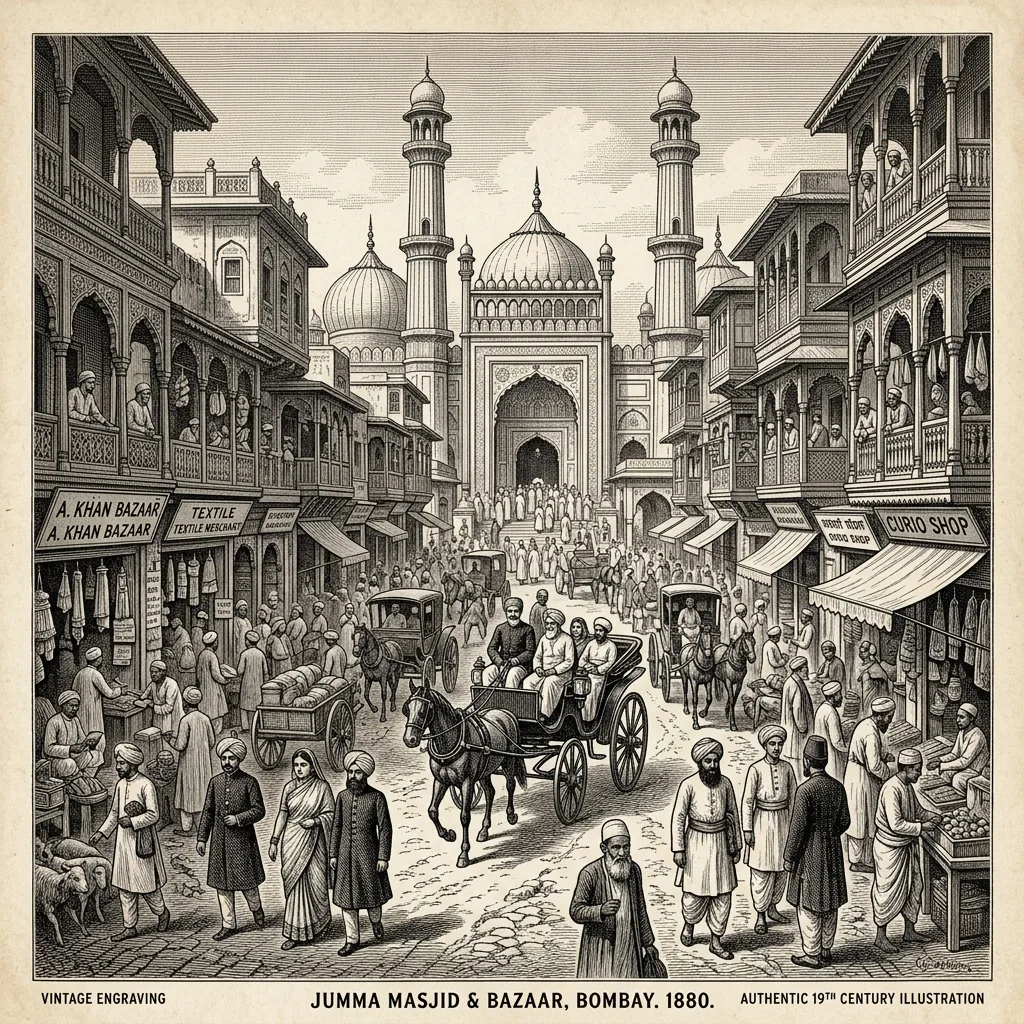
JUMMA MASJID AREA, BOMBAY
In October 1851, Mumbai was pushed towards a communal catastrophe by something that began with a printing mistake.
Bairamji Casatji, a Parsi editor of the educational newspaper Chitradnyanadarpan, published a lithograph of the Prophet Muhammad. An excess of ink made the Prophet appear blind. The image was pasted on the doors of the Jumma Masjid, and violence followed. Muslims attacked Parsis and looted shops. The British authorities struggled to regain control, with only about 700 police officers for a city of roughly 700,000 people.
Then the danger became even greater. The Parsi community sought refuge, while Mumbai's Hindu population prepared to join the fighting against the rioters. A second wave of violence could have turned the riot into something far worse.
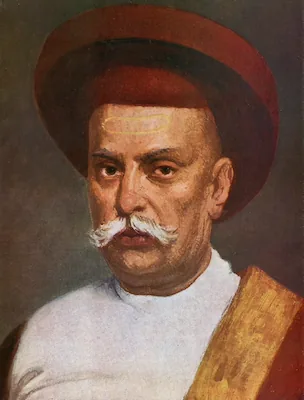
Nana Shankarshet intervened personally. He patrolled the affected neighbourhoods and used his influence to prevent the Hindu community from launching a counter-attack against the Muslims. At the same time, he worked with Parsi and Muslim leaders to find a way out of the crisis.
The 18-Carriage Peace Convoy: On November 30, 1851, after securing a formal apology from the Parsi editor, Nana led an extraordinary peace procession. Riding in a convoy of eighteen carriages alongside British officials including Lumsden and Sir Erskine Perry and the Muslim Qazi, Nana carried the message of peace, successfully restoring peace.
Nana did not merely negotiate peace behind closed doors. He took it into the streets.