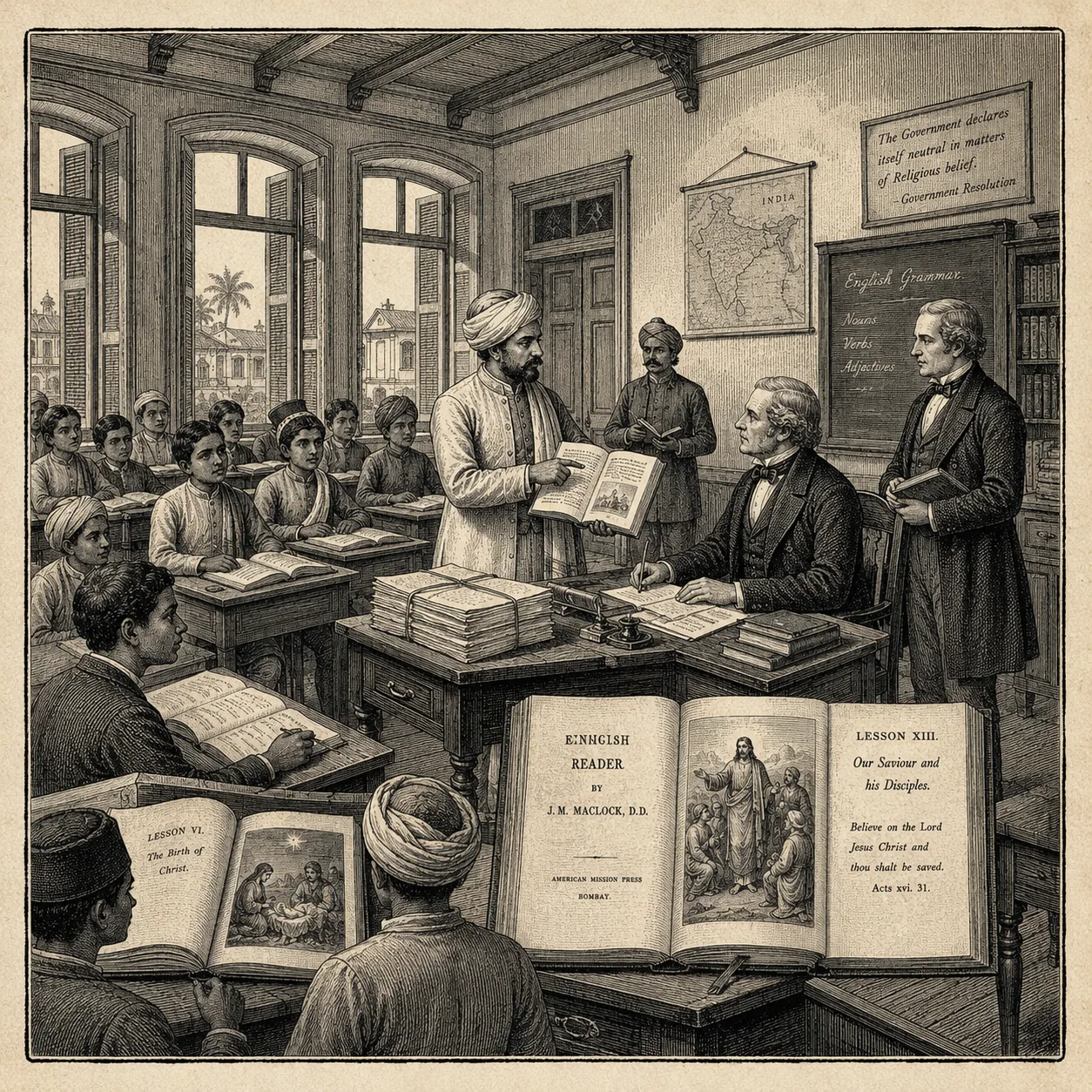
ELPHINSTONE INSTITUTION CLASSROOM
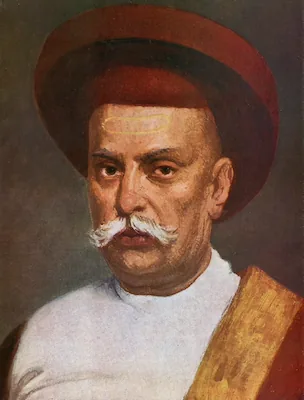
Nana's fight over education was not simply about building schools. It was also about deciding what children would learn inside them.
As a founding member of the Board of Education, Nana supported government education that was secular and accessible in the mother tongue. In the early 1850s, he became concerned about English textbooks published by Christian missionaries, including books associated with Dr. J.M. Maclock, being used in government schools like the Elphinstone Institution.
The books contained lessons designed to introduce Hindu, Parsi and Muslim children to Christian theology. Nana did not simply object in principle; he went through the textbooks himself, compiled a list of the objectionable material, and mobilized a petition signed by more than 1,000 citizens.
His argument was straightforward: if the government promised religious neutrality, state-funded schools should not promote one religion.
Secularism in State Education: Taking the issue directly to the government, Nana's campaign succeeded. The Director of the Education Department banned the objectionable books and issued orders prohibiting religious proselytization in government schools.
For Nana, the question was not only who could enter a school. It was also what happened once they got inside.