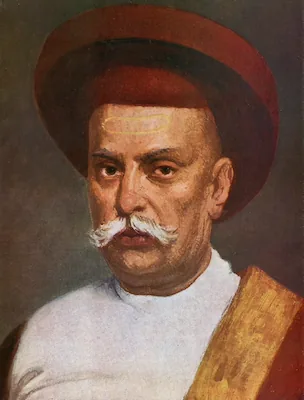
The Architect Beneath the City
The Only Indian Face on the Wall
Jagannath "Nana" Shankarshet (1803–1865)
The merchant statesman who turned private capital into public capability.
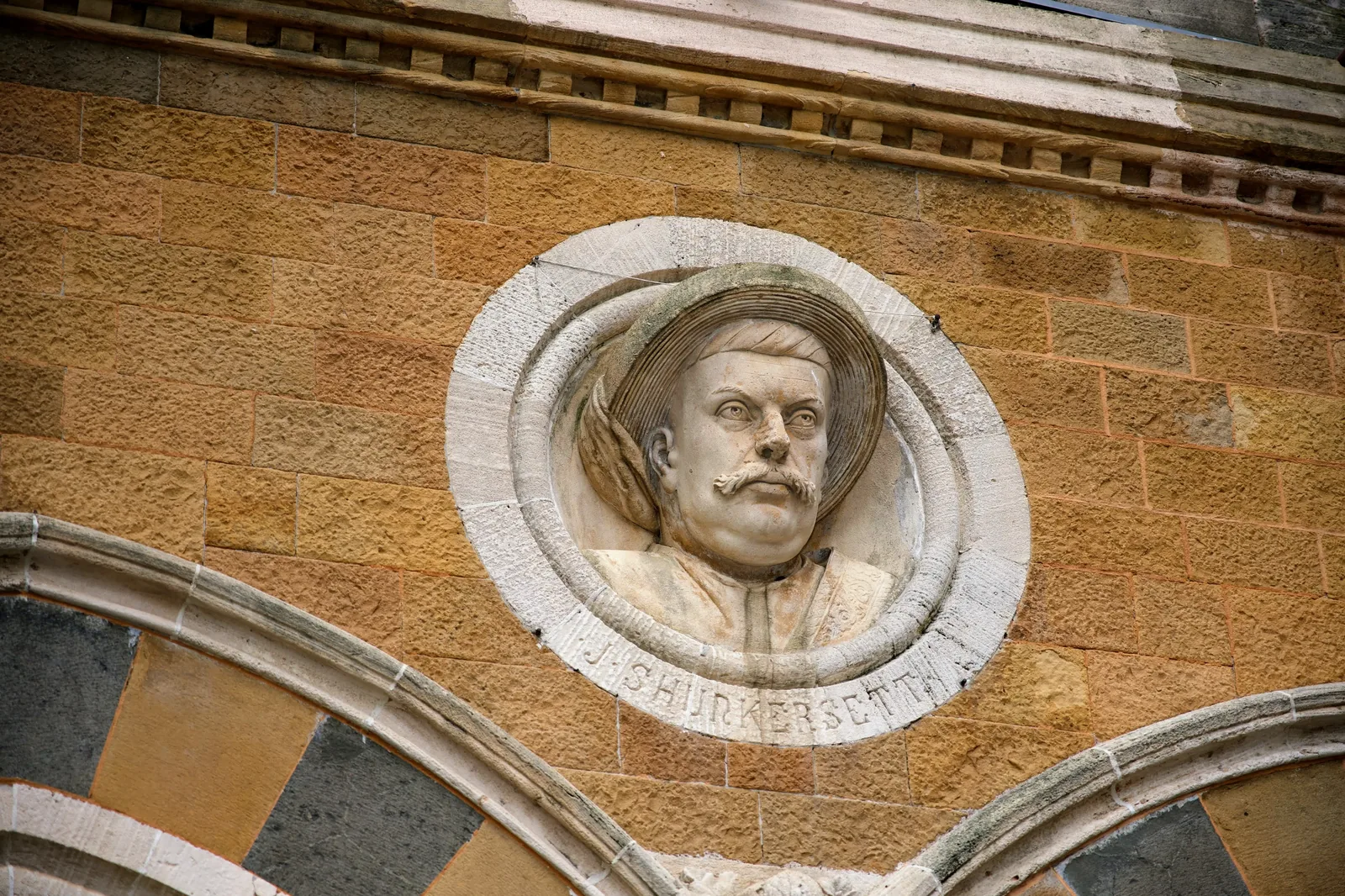
There is a stone bust carved high into the facade of Chhatrapati Shivaji Maharaj Terminus. Around three million commuters rush beneath it every single day. Almost none look up. Fewer still know whose likeness watches over the rhythm of their day.
It is the only Indian face carved into the original stone of that grand building.
He was known across the island simply as Nana. Born in 1803 into an unsettled, swampy Bombay where English merchants wagered their life expectancy by how many monsoons they could survive, he died in 1865. On the day of his passing, the city closed: schools, dockyards, cotton mills, administrative chambers, and bazaars shuttered as fifteen thousand people walked behind his cortege from Girgaon to the sea.
Then, Mumbai forgot him almost completely.
The paradox of Jagannath Shankarshet is profound: he succeeded so thoroughly at building the foundational machinery of modern India that the man himself dissolved into the everyday life of the city.
Before Nana
A Lineage of Enterprise
Before Nana sat in council chambers or backed trans-peninsular railways, his ancestors lived by a vital truth: when the world shifts, you do not retreat. You move forward.
The family carried the ancestral name Murkute, belonging to the Daivadnya community. While traditional craft was tied to goldsmithing, the early patriarch Narayan Sheth looked outward. Leaving Murbad near Shahapur, he ventured to Porbandar to trade in wholesale pearls. His son, Manik Sheth, stayed anchored in the Konkan trade corridor, managing the family treasury (potdari) while trading essential spices, tea, sugar, and credit across Sopara, Kalyan, Thane, and Surat.
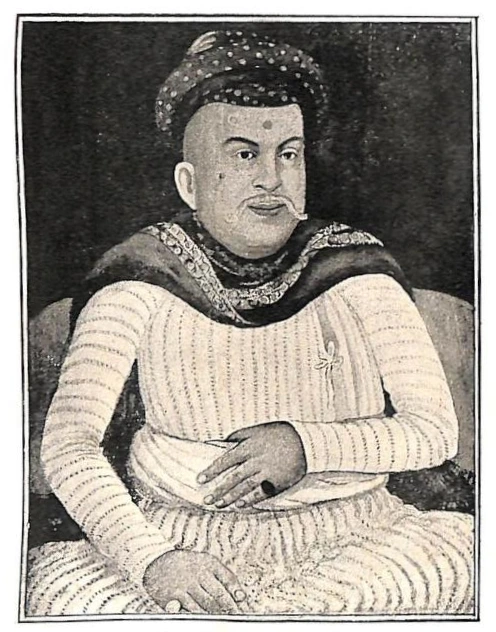
Shankar Sheth Babul Sheth Murkute
The visionary merchant who brought the family pedhi from Ghodbunder into the heart of Bombay.
When changing political currents and missionary pressures disrupted the hinterland, Nana’s grandfather, Babul Sheth, moved the enterprise to Ghodbunder, securing a dominant trade in betel leaves while maintaining the family shrine, the Amruteshwar Mahadev Mandir.
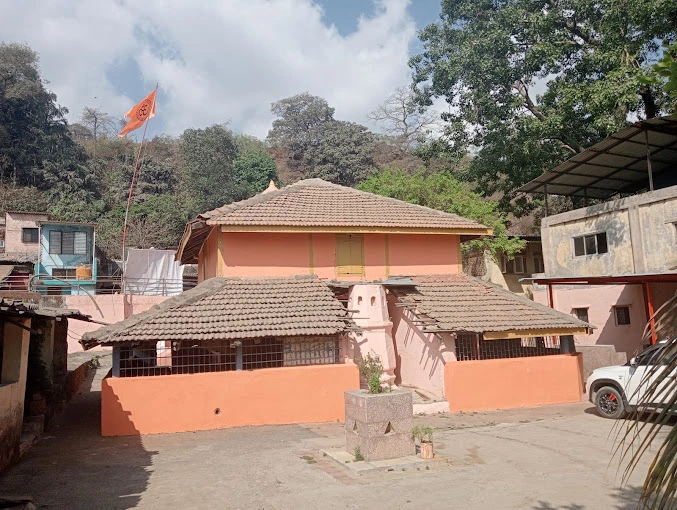
Amruteshwar Mahadev Mandir, Ghodbunder
The 300-year-old ancestral shrine that remains a living symbol of the heritage that helped shape Bombay.
From Ghodbunder, Babul Sheth recognized that the British were transforming the seven islands into a global deepwater port. He opened a branch of the family pedhi in Bombay and placed it under the command of his eldest son: Shankar Sheth.
Shankar Sheth was relentless. He mastered English, Portuguese, and Gujarati. Defying traditional taboos, he apprenticed inside an English mercantile firm to master global trade, built his own merchant fleet, and accumulated over sixteen lakh rupees in liquid capital. Arab and Afghan traders deposited their gold in his vaults rather than colonial banks.
Shankar Sheth did not just build a fortune; he proved that fluency across cultures was a nation's strength.
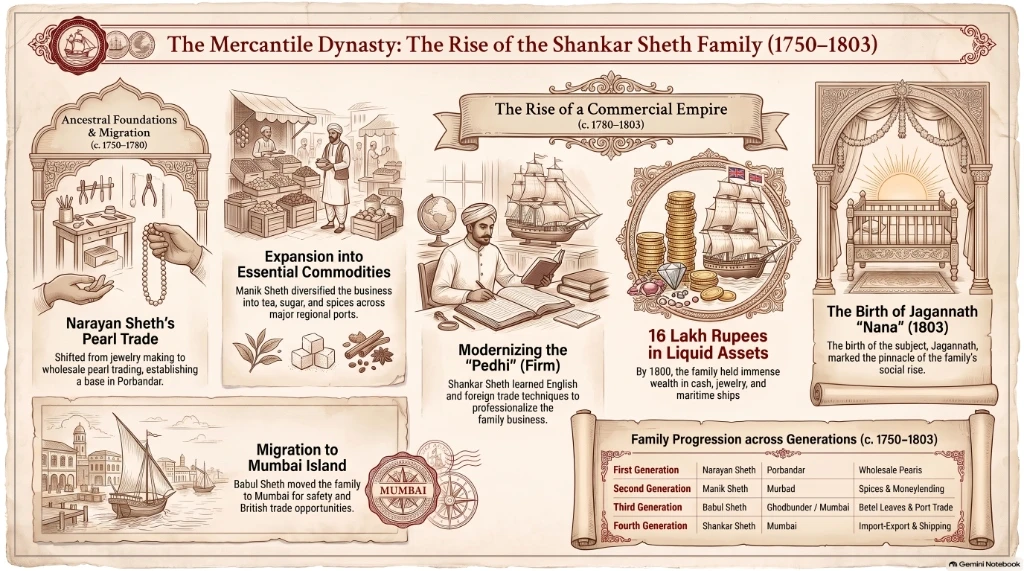
The Mercantile Dynasty: The Rise of the Shankar Sheth Family (1750–1803)
A visual chronology mapping the enterprise from its ancestral foundations in Porbandar and Murbad to the birth of Jagannath "Nana" Shankarshet in Bombay.
The Education of a Statesman
Grounded in Tradition, Armed with Modernity
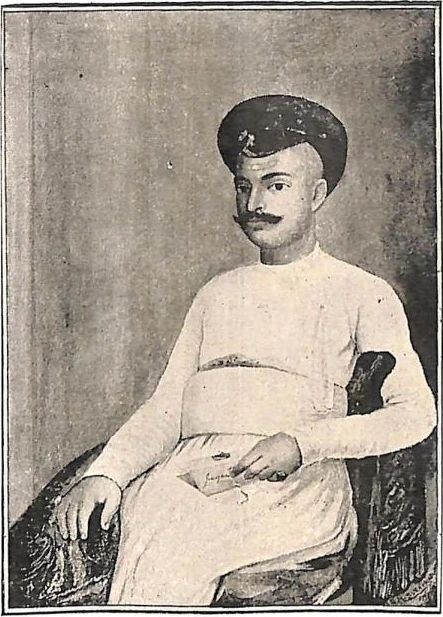
Jagannath "Nana" Shankarshet in his youth
Trained simultaneously in Sanskrit classics, British jurisprudence, and commercial diplomacy.
On February 10, 1803, Shankar Sheth and Bhavanibai welcomed a son: Jagannath.
Tragedy struck early. When Nana was three and a half, his mother passed away; a younger brother later drowned. The grieving father poured all his wisdom into Nana. Shankar Sheth understood that in an emerging India, wealth without intellectual mastery was powerless.
- The Classical Soul: Marathi and Sanskrit scholars grounded him in philosophy, culture, and ethics.
- Western Law & Governance: English scholars Robert Murphy and W.B. Mainwaring tutored him in British jurisprudence, constitutional history, and administration. Murphy, the government's Oriental Translator, also shared his love for botany. Nana came to see green spaces as civic essentials, a passion that later blossomed into Rani Baug.
- Commercial Statesmanship: Shankar Sheth took Nana directly into boardrooms with Parsi shipbuilders, Gujarati financiers, and British merchants.
When Shankar Sheth passed away in 1822, nineteen-year-old Nana inherited the vast commercial house. Where others might have chosen a life of private luxury, Nana turned toward public service.
The Blueprint of Modern Mumbai
Laying the Foundations of Human Capability
Nana realized what few of his contemporaries saw: a nation cannot be built on roads and cotton presses alone. It requires human capability.
Over four decades, he systematically laid the intellectual and social foundation of the city:
- The Educational Spine: Along with Mountstuart Elphinstone, Nana co-founded the Native School Book and School Society (1822), giving rise to the Elphinstone Native Education Institution. He insisted on teaching English and Indian languages together, believing progress should never sever a people from their roots.
- The University and Professional Colleges: He co-founded Grant Medical College (1845) so Indians could practice modern medicine, helped establish the Government Law College (1855), supported the Sir J.J. School of Art (1857), and was a founding fellow of the University of Bombay (1857).
- Public Health: He financed the Bombay Native Dispensary (the city’s first free medical clinic) and supported maternal health clinics.
- Asia’s First Railway (1853): In the 1840s, Nana partnered with Sir Jamsetjee Jeejeebhoy to form the Indian Railway Association. When British engineers arrived with nowhere to plan, Nana opened his own home to them. On April 16, 1853, when the historic first locomotive steamed from Boribunder to Thane, Nana sat in the first carriage.
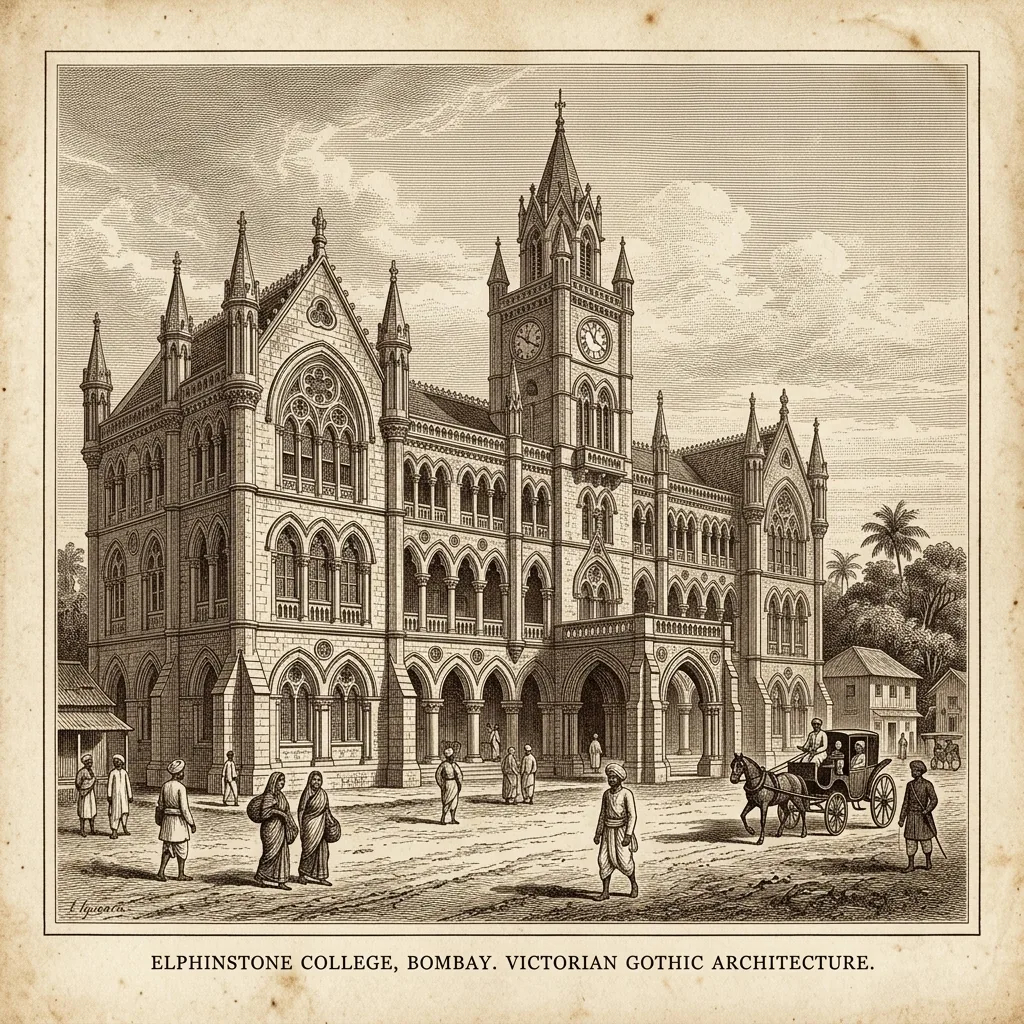
Elphinstone College
Founded from the native education fund championed by Nana, nurturing the minds that led India's national awakening.
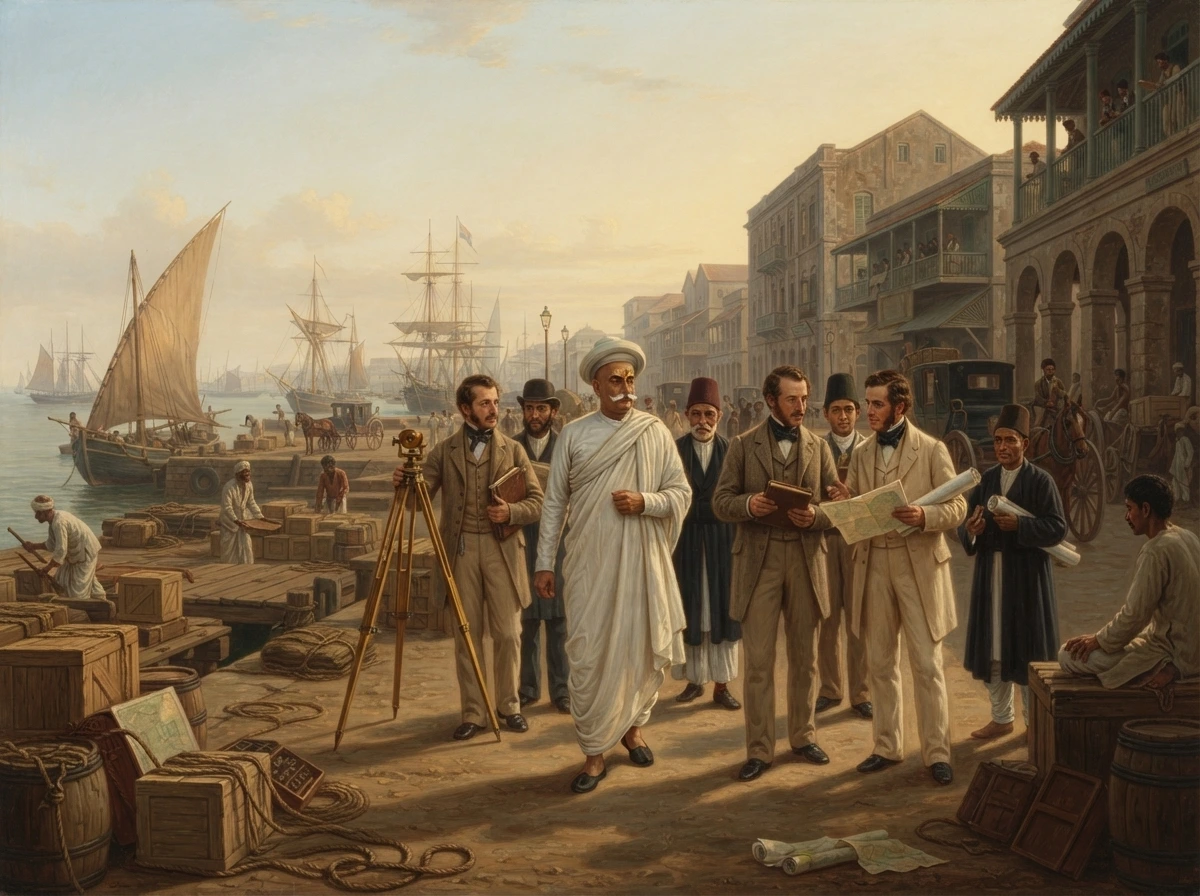
Building the Nexus of Global Commerce
Nana Shankarshet collaborating with engineers and merchants to establish Asia's first railway line.
Institutional Courage
Fighting From Within
Nana was neither a subservient collaborator nor a violent insurgent. He chose a demanding path: changing a colonial system from within.
- Jury Rights for Indians (1826): Nana spent years mobilizing petitions to force the British Parliament to admit Indians to Grand Juries and criminal trial benches.
- The Bombay Association (1852): Recognizing that real political progress required organized advocacy, he co-founded Western India's first formal political organization. The Association drafted structured petitions directly to the British Parliament, becoming the organizational forerunner of the Indian National Congress.
- Legislative Council (1862): When the British Crown created seats for Indian representation, Nana was appointed the first Indian member of the Bombay Legislative Council.
He proved that sovereignty begins by claiming a seat at the table.
The Moral Compass
Making Room for All
Nana's civic devotion went far beyond buildings; he consistently risked his personal standing to defend community dignity and social justice.
- Sati Abolition (1823): At only twenty years old, he broke with conservative orthodoxy to add his name beside Raja Ram Mohan Roy’s petition banning Sati.
- The Shripat Sheshadri Case (1843): When a twelve-year-old boy was converted by foreign missionaries, Nana fought the case in the Supreme Court to return him to his family. When orthodox leaders declared the boy permanently outcast, Nana funded and supported his purification (shuddhi), enduring fines and ostracism without backing down.
- Universal Education: He opened schools for the children of indigenous Koli fishermen out of his own pocket and fought for the education of lower-caste children, earning public praise from Mahatma Jyotirao Phule.
- Protecting the Sonapur Cremation Grounds: When colonial authorities attempted to shut down the historic Hindu burning grounds at Marine Lines, Nana led two thousand Koli fishermen to the Governor's residence, stood firm against the decree, and donated his own land to safeguard their sacred ground forever.
Wealth as Sacred Trust
Capital Directed Toward Generations
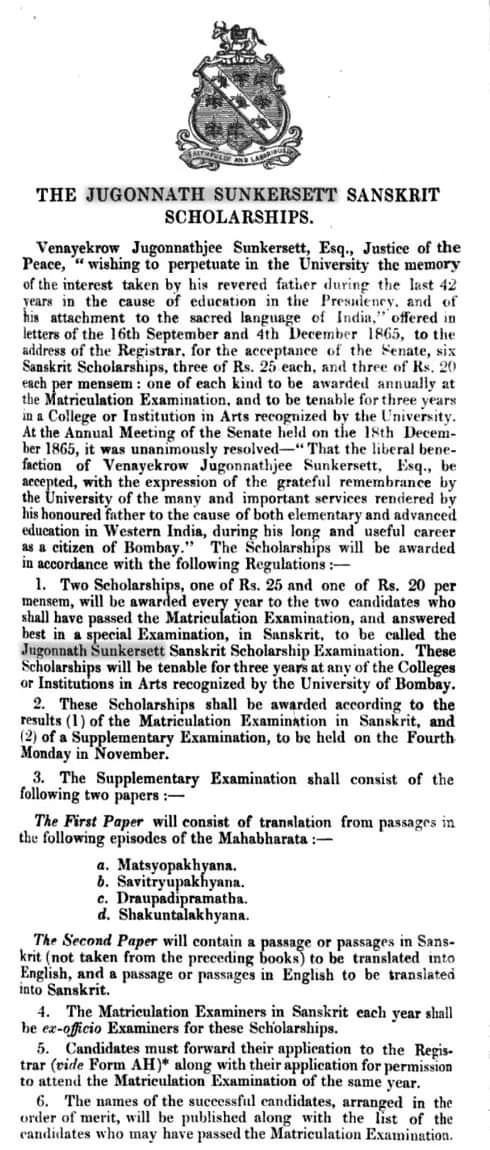
Jagannath Shankarshet Sanskrit Scholarship
Established in 1866, nurturing generations of India's foremost scholars.
Nana saw wealth not as personal property, but as public capability.
Following his death in 1865, his son Vinayakrao established the Jagannath Shankarshet Sanskrit Scholarship at the University of Mumbai. For more than 160 years, this fund has quietly supported generations of scholars, including C.D. Deshmukh (the first Indian Governor of the RBI), freedom fighter Senapati Bapat, social historian R.G. Bhandarkar, and Sanskrit scholar Waman Shivram Apte.
Generations of scholars were nurtured by a fund whose benefactor many never knew.
Why the City Forgot Him
Upstream of Giants
How did the architect of modern Bombay become so quiet in public memory?
- The Nature of Infrastructure: When a school educates, a hospital heals, or a train runs on time, people experience the service, not the founder.
- The Narrative of Struggle: Later histories naturally highlighted the fiery agitators of the independence movement. Nana belonged to the foundational generation who built the civic and legal platforms that made that movement possible.
- Upstream of Giants: Dadabhai Naoroji, Mahadev Govind Ranade, Pherozeshah Mehta, and Lokmanya Tilak were all shaped by the institutions Nana built. He was the quiet foundation beneath their achievements.
Look Up
Living Within His Decisions
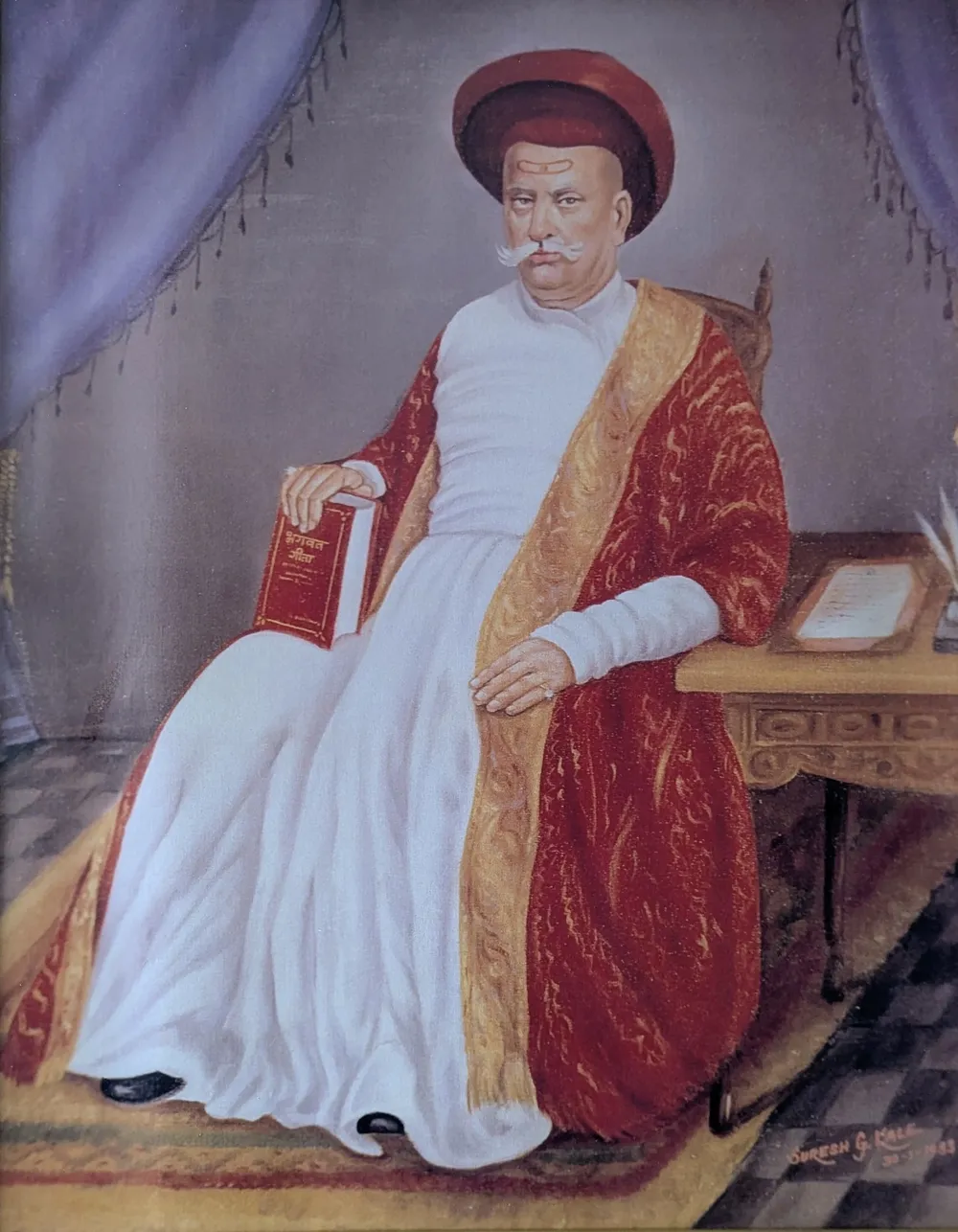
From Roots to Legacy
The world Nana inherited shaped the choices he made, and the city he helped build still carries them forward.
The next time you board a train at CSMT, cross the junction of Nana Chowk, walk under the trees of Rani Baug, or pass the stone arches of the Town Hall and Elphinstone College, remember: you are walking through the living decisions of one man.
He inherited wealth. He returned infrastructure.
The next time you walk beneath the terminus facade: look up.
The Archive & Civic Commemoration
Official Tributes and Philatelic Artifacts
The Shankarshet Family Coat of Arms
Granted in recognition of the family’s civic contributions, the Shankarshet Coat of Arms stands as an archival symbol of indigenous leadership during a transformative era. Featuring emblems of maritime trade, civic integrity, and public service, it marks the rare bridge where traditional heritage met modern civic responsibility.
The 1991 Commemorative Stamp & First Day Cover
On February 15, 1991, the Department of Posts honored Jagannath Shankarshet on his 125th death anniversary:
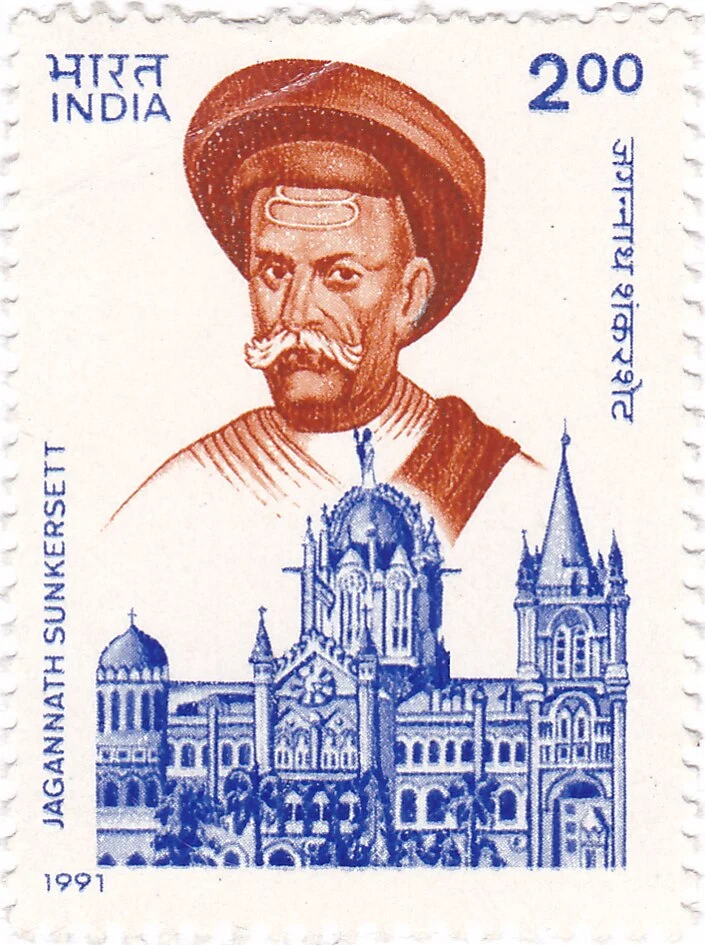
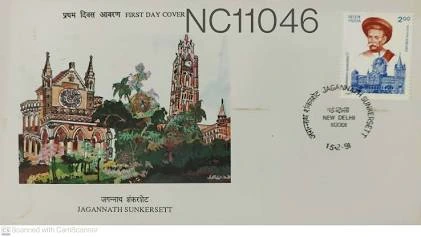
The stamp design features a portrait of Jagannath Sunkersett alongside railway imagery, highlighting his instrumental role in establishing the 1853 railway line from Mumbai to Thane. The accompanying First Day Cover depicts the historic Convocation Hall and Library of the University of Mumbai Fort Campus, representing his major educational contributions. The compilation of these commemorative archives involved collaboration with Shri Vasantrao R. Sunkersett, the Daivadnya Samajonnati Parishad, and Mrs. Alka Sharma.
PHILATELIC RECORD
Jagannath “Nana” Shankarshet, 10 February 1803 – 31 July 1865. His statue stands in the Town Hall at Horniman Circle. His bust is on the front of CSMT, and at the gate of the Sonapur cremation ground, on land he gave the city. Nana Chowk is named after him. So is the road. Most people who use them don't know why.